order pasta for takeaway. fantastic portion for €10 and it was so so so delicious! would recommend.
Overview
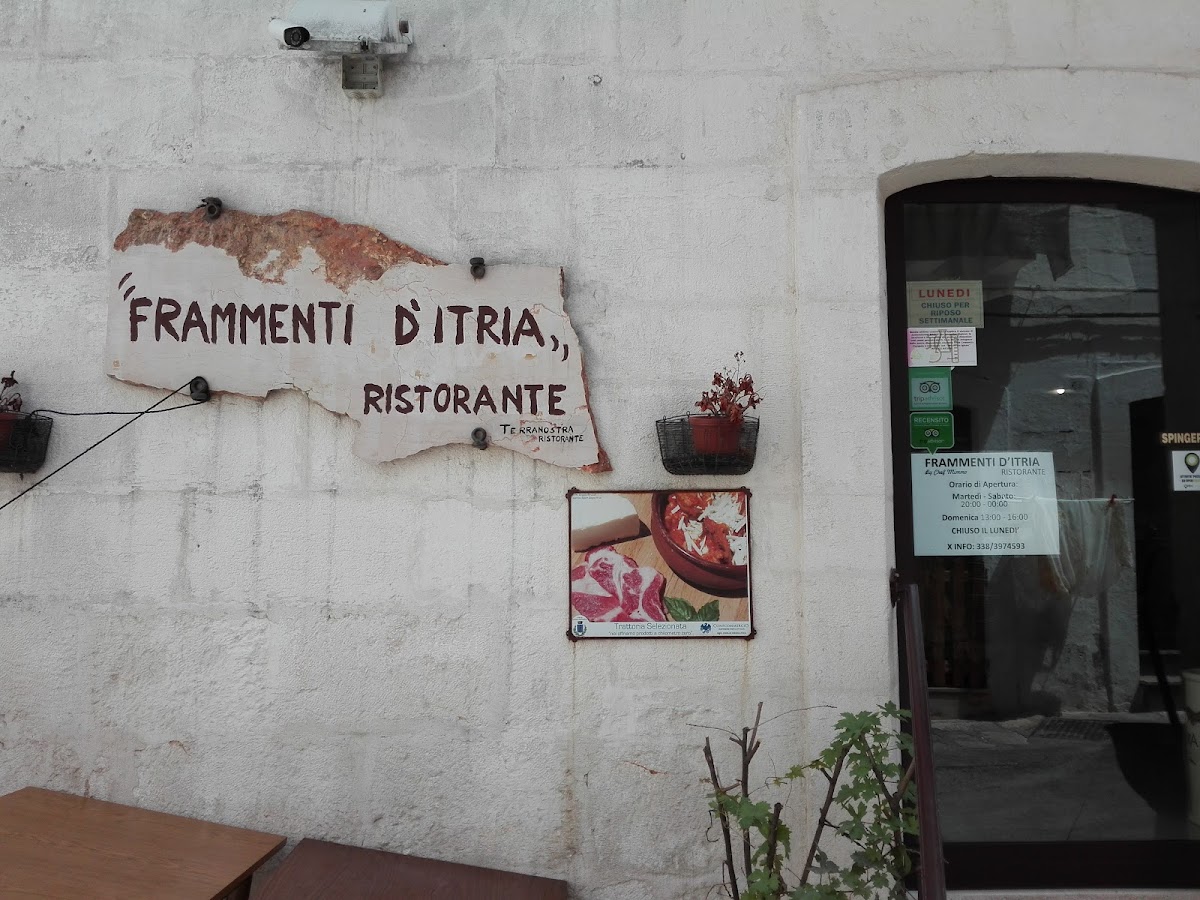
Walking down Vico III Monte in the old town of Ceglie Messapica, the stone streets narrow and the pace slows, which is exactly when Ristorante 'frammenti D'itria' starts to make sense. Tucked away at Vico III Monte, 28, 72013 Ceglie Messapica BR, Italy, this is the kind of place you don’t rush into. You arrive curious, maybe a little hungry, and leave feeling like you’ve been let in on a local secret.
The first time I ate here was on a weekday evening, the kind where locals drift in after work and tourists stumble upon it by instinct rather than planning. That mix matters. Restaurants that cater only to visitors tend to lose their soul, but here the dining room hums with Italian conversation, clinking glasses, and plates that linger on tables because no one wants the meal to end. The menu changes with the seasons, and that’s not a marketing line. It’s practical cooking rooted in what nearby farms and markets actually produce that week.
Apulian cuisine is often described as simple, but that word can be misleading. According to research published by the University of Bari, traditional regional dishes rely on fewer ingredients but demand precise techniques and high-quality raw materials. You feel that philosophy in every course here. Handmade pasta arrives perfectly al dente, dressed with olive oil pressed from local olives, rich in polyphenols that studies from the Italian National Research Council link to anti-inflammatory benefits. That balance between flavor and health is part of why southern Italian food continues to earn global respect.
One standout dish I remember clearly paired slow-cooked lamb with wild herbs foraged from the surrounding countryside. The chef explained how the meat was braised at low temperature for hours, a method commonly used in rural kitchens to preserve tenderness without overpowering natural flavors. It’s cooking that respects time, something increasingly rare. This approach aligns closely with the farm to table philosophy, even if no one here feels the need to label it.
Reviews often mention the wine list, and for good reason. The selections lean heavily on regional producers, especially small Puglian wineries that don’t always export. A glass of Negroamaro or Primitivo here isn’t just a drink, it’s context. The staff knows the bottles well and can explain how soil composition and climate affect each vintage, drawing on guidance from organizations like Slow Food Italia, which advocates for preserving local food heritage.
What also stands out is how approachable everything feels. Fine dining techniques are present, but without stiffness. Portions are generous, plating is thoughtful but never fussy, and questions about ingredients are welcomed. Transparency builds trust, especially today when diners care deeply about sourcing and preparation. While nutritional details aren’t listed explicitly, the reliance on vegetables, legumes, olive oil, and lean proteins reflects the Mediterranean diet pattern recognized by UNESCO as Intangible Cultural Heritage.
There are limitations worth noting. Seating is limited, and during peak travel months reservations are almost essential. The location, charming as it is, can be tricky to find on a first visit, especially after dark. Still, these are small trade-offs for a dining experience that feels grounded and sincere.
More than just a restaurant, this spot acts like a snapshot of the Itria Valley itself. Food here isn’t rushed or overexplained. It’s served with confidence, shaped by tradition, and quietly refined through experience. Whether you’re scanning reviews before booking or wandering the historic center looking for dinner, this is the kind of place that reminds you why regional Italian cooking continues to set the standard worldwide.
Good to know
Service options
✓ Dine-in ✓ DeliveryHighlights
✓ Great coffee ✓ Great dessertPopular for
✓ Lunch ✓ Dinner ✓ Solo diningAccessibility
✓ Wheelchair-accessible car park ✓ Wheelchair-accessible entrance ✓ Wheelchair-accessible seating ✓ Wheelchair-accessible toiletOfferings
✓ Alcohol ✓ Beer ✓ Coffee ✓ Healthy options ✓ Late-night food ✓ Spirits ✓ WineDining options
✓ Lunch ✓ Dinner ✓ Dessert ✓ Seating ✓ Table serviceAmenities
✓ ToiletAtmosphere
✓ Casual ✓ Cosy ✓ Historic ✓ Quiet ✓ Romantic ✓ TrendyCrowd
✓ Groups ✓ TouristsPlanning
✓ Lunch reservations recommended ✓ Reservations required ✓ Dinner reservations recommended ✓ Accepts reservationsPayments
✓ Credit cards ✓ Debit cards ✓ NFC mobile payments ✓ Credit cardsChildren
✓ Good for kids ✓ High chairs ✓ Kids' menuParking
✓ Free of charge street parking ✓ Free parking lot ✓ ParkingPets
✓ Dogs allowedPhotos
1 / 4
Location
Reviews
- No ratings yet 862 reviews
Amazing food, cheap prices and big portions! We were absolutely stuffed and happy afterwards. A must visit !!
Excellent food for a great price! If you're looking for local food, this is definitely the place for you!
Ottima qualità prezzo, menù abbondante... siamo partiti con antipasti di terra e mare in tutto erano più di 10 tutti ottimi e freschi per concludere con un primo dolce acqua caffè amaro per 20 euro cadauno. (Eravamo in due) . Servizio ottimo. Consigliatissimo
Esperienza gradevolissima, suggerito da un amico abbiamo avuto il piacere di cenare in un ambiente familiare, pulito,ordinato e tipico di una casa pugliese. Il servizio cortese, rapido e discreto. Unico neo il cibo, ECCELLENTE, quindi mangi tutto e ti senti in colpa con te stesso. Antipasti molto buoni, primo e secondo gustosi. Che dire lo suggerisco con serenità.
La comida es buena. Un poco caro, los precios no están actualizados en Google . Los platos salen a 15, el menú a 20. Son amables, aunque el sitio no tiene ningún atractivo en particular, ni siquiera música ambiente . Tienen atenciones como en entrante y unos chupitos, eso se agradece .
Eravamo in 4 a pranzo 6 gennaio e le proposte erano per un menu da 20 euro oppure un menu da 25 euro . Noi abbiamo scelto quello da 25 ed abbiamo mangiato tanto e bene . Antipasti assortiti ( circa 8 portate ) + 2 primi a scelta + 2 secondi a scelta con contorno . Il dolce e l'amaro era anche compreso nel menù da 25 euro come erano comprese tutte le bevande . Locale consigliato sia per il servizio veloce che per la qualità delle pietanze . Al più presto ci ritorneremo con altri amici .
Cucina di qualità, personale gentile e veloce, prezzi assolutamente convenienti. Nonostante il numeroso gruppo di persone che eravamo , il servizio è stato eccellente. Ci ritornerò